
Hand hygiene is the first line of defense for protecting your health. Mastering scientific handwashing methods—paired with thorough drying using high-quality paper hand towels—can effectively prevent the spread of germs. This practice is especially suitable for daily use by the whole family and serves as a crucial habit for safeguarding children’s healthy growth. Below, we’ll break down a simple, easy-to-remember, and highly effective way to wash your hands.
Small Preparations Before Washing Hands
Before starting to wash your hands, it’s recommended to remove any rings, watches, bracelets, or other jewelry to prevent dirt and germs from accumulating in the crevices and affecting the cleaning effect. You can also encourage your family to participate, especially guiding children to develop the good habit of frequent handwashing from a young age, making hygiene protection a family consensus.
Five Steps to Scientific Handwashing – Don’t Skip a Single Step
1. Wet hands with running water, water temperature matters
First, turn on the tap and thoroughly wet your hands with clean running water. Note that the water temperature should not be too high (30-40℃ is recommended) to avoid irritating the skin. After wetting your hands, turn off the tap immediately to reduce water waste and adhere to environmental principles – stagnant water easily breeds bacteria, while running water ensures a clean foundation.
2. Apply soap thoroughly, rub for sufficient time
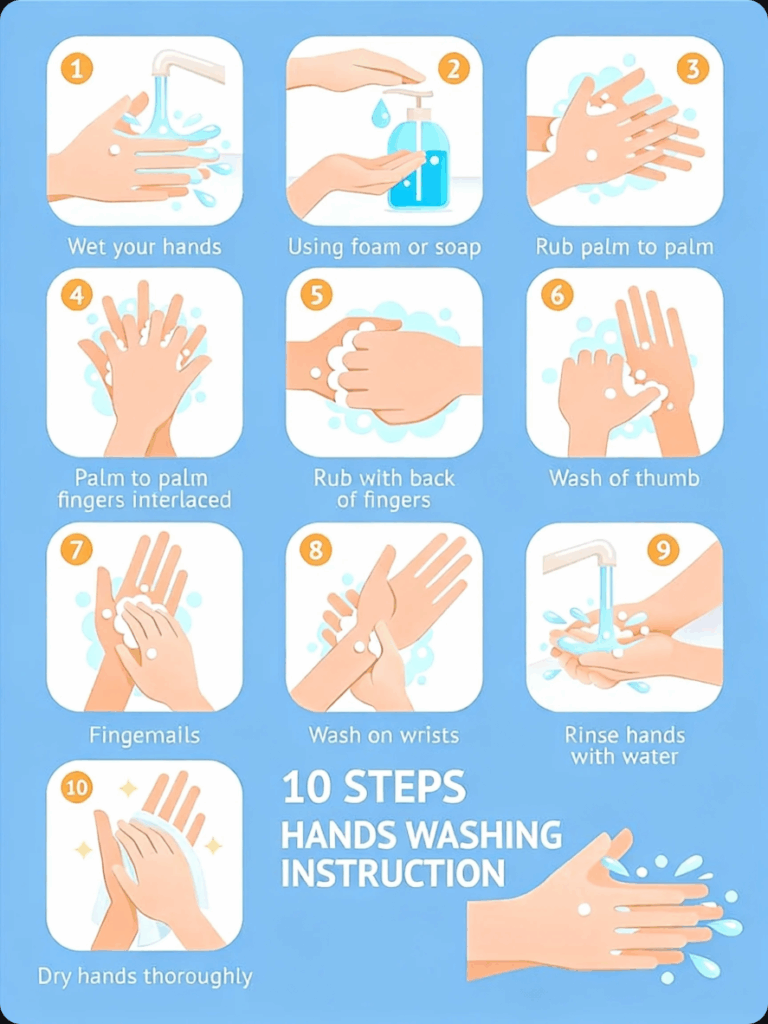
Take an appropriate amount of soap or hand sanitizer (you can choose a gentle or antibacterial type depending on your skin type), add a small amount of water to your palm, and rub until a rich lather is produced. When rubbing your hands, make sure to cover all surfaces. Now, let’s go through the seven-step handwashing method:
① Wash your palms: Wet your hands with running water, apply hand sanitizer (or soap), and rub your palms together with fingers interlaced.
② Wash the backs of your fingers: Rub the palm of one hand against the back of the other hand along the finger gaps, and repeat with the other hand.
③ Wash the sides of your fingers: Rub your palms together with fingers interlaced, rubbing along the finger gaps.
④ Wash the backs of your fingers: Bend your finger joints, make a half-fist, and rub the backs of your fingers against the palm of the other hand in a circular motion, and repeat with the other hand.
⑤ Wash your thumbs: Hold one thumb with the other hand and rub it in a circular motion, and repeat with the other hand.
⑥ Wash your fingertips: Bend your finger joints, bring your fingertips together, and rub them against the palm of the other hand in a circular motion, and repeat with the other hand.
⑦ Wash your wrists and forearms: Rub your wrists and forearms, and repeat with the other hand.
This is especially important after handling raw meat, touching pets, or using gardening tools. Don’t skip this step!
Many people don’t know how long they should wash their hands. Each step should be rubbed at least 3-5 times, with the core standard being at least 30 seconds in total – you can hum “God is A Girl” or count to 30 seconds. For children, this interactive method can make handwashing more fun and prevent them from rushing through it.
3. Rinse thoroughly, leaving no soap residue.
Rinse your hands slowly with running water from your wrists to your fingertips, ensuring that all foam, dirt, and germs are completely washed away. Do not leave soap residue on your skin, as this can lead to dryness and itching.
4. Turn off the water promptly, practicing environmental protection.
After rinsing, turn off the tap again. Develop the habit of “turning off the water immediately” to save precious water resources and contribute to an environmentally friendly lifestyle.
5. Dry thoroughly to avoid secondary contamination.
The last step of handwashing is crucial – dry your hands thoroughly with a clean, dry towel or disposable paper hand towel, especially between your fingers and around your nails. Damp hands are more likely to breed bacteria. Choosing highly absorbent cleaning products like Yizheng® paper hand towel can quickly dry your hands and reduce the chance of germ growth.
Wash your Hands to Keep Germs Away
Handwashing is the simplest and most effective way to prevent germ invasion. Mastering the scientific method and developing good habits will build a strong “protective wall” for your and your family’s health. Remember, germs enter through the mouth. From today, let correct handwashing become a daily standard, stay away from germ-related problems, and protect the health of your whole family!
Home >> Blog